Skip to content

Selected work

The work I can show you, in the order it happened.

A good deal of it never appears anywhere — the consulting, the products that shipped under somebody else's name, anything still under agreement. These are the highlights I am free to describe.

  1. FXhome2001–2021
  2. Artlist2021–now
  3. Independent2023–now

FXhome2001–2021

Founder and CEO for two decades. In 2001 the software that made films look like films was built for facilities and priced for them. The independent filmmakers with the most ideas had the least money. I set out to help people find their voice and enjoy making films. That turned quickly into something bigger: professional editing, compositing and VFX within reach of anyone who needed them, and the teaching to make the most of it. A multi-award-winning company, both for our products and our customer service.

AlamDV2001–2005

The simple visual-effects product that started it all, built on the effects people loved from Star Wars and The Matrix — and the community of young filmmakers around the world who found a home around it.

Many of them went on to work on the real Star Wars films.
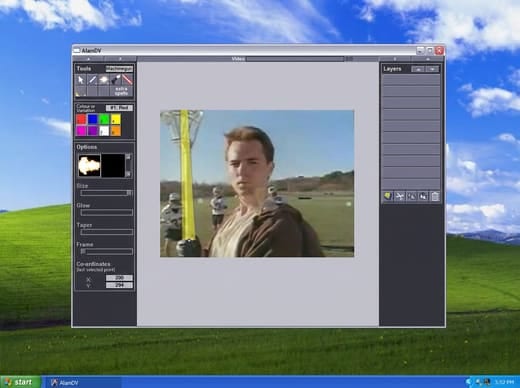
AlamDV running on Windows XP: a small effects application with a tool palette, a colour picker and a layers list, showing a video frame of a man on a sports field with a yellow lightsaber blade drawn over it.
Yes, it really did look like this in 2001.

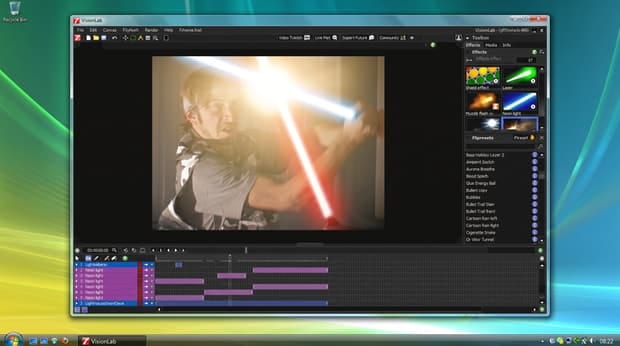
VisionLab2006–2011

EffectsLab and CompositeLab in one product, with a great deal more besides, and a teaching platform built alongside it. That combination is what turned an audience into a grassroots movement.

Award-winning, as a visual-effects tool to run beside whatever editor you already had.

VisionLab open on Windows: a lightsaber duel held in the viewer, a browser of effects presets down the right-hand side, and a stack of coloured effect layers on the timeline below.

PhotoKey2007–2023

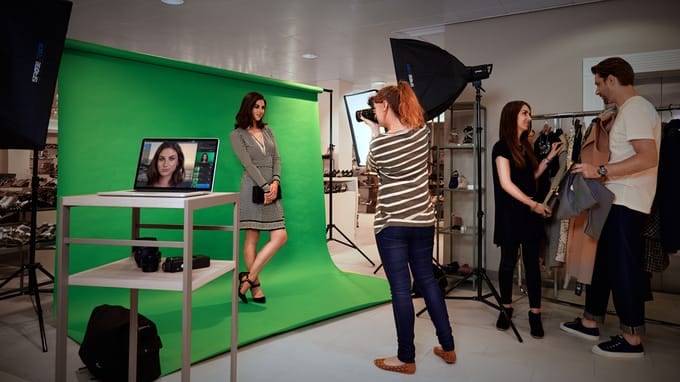
The world's leading green-screen photography and event software: shoot against green, composite and deliver on the spot.

Used from theme parks to Formula One and the Wimbledon Tennis Championships, and white-labelled into kiosks and booths around the world. Award-winning, as the best green-screening tool on the market.

A PhotoKey shoot in a clothing shop: a model against a green backdrop, a photographer working handheld, and a laptop on a stand beside them already showing the composited result.

2011–2025

HitFilm

Professional post-production, priced so a sixteen-year-old could learn on it.

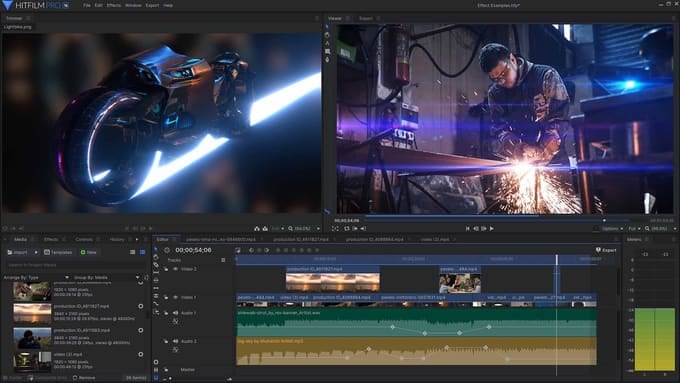
Everything the earlier products had taught us, rebuilt as one thing: editing and visual effects in a single 3D space, with compositing that went further than Adobe’s own at the time. 3D particle systems and models, keyframed and behaviour-based animation, colour grading, and an editor quick enough to actually cut on.

The entry version went out on pay-what-you-want, with the option to send your payment to charity rather than to us. Our customers being who they are, they took it — extensively. Six million people called HitFilm home, and the community they built around it was extraordinary.

HitFilm Pro 16 mid-edit: a rendered lightbike in the trimmer, a graded shot of a welder in the viewer, and a multi-track timeline of video and audio layers beneath both.

EVIDENCE

  1. HitFilm: six million users worldwide.
  2. HitFilm for Mac funded on Kickstarter, 2013.
  3. By user numbers, a top-seven video editor and the second-largest compositor in the world.
  4. Collaborations with Sony, Wondershare and MAGIX followed the launch.
  5. Multi-award-winning as an entry-level video editor, and consistently rated among the top five video editing options for filmmakers and visual-effects work.
  6. FXhome initiatives raised over $250,000 for charity, including COVID-19 and environmental causes.

2020–2026

CamTrackAR & Apple

Virtual production that fits in your pocket.

CamTrackAR recorded the camera’s path in 3D while you filmed on an iPhone or iPad — handheld, because the track came off the device rather than a rig — so the tracking data arrived in post alongside the footage, with green-screen capture and previsualisation you could see on location rather than imagine. Apple featured it in the 2021 iPad Pro launch keynote.

Then it went the other way. Something one person could shoot handheld was picked up in Hollywood, for stunt coordination and pre-production on Disney and Marvel films.

EVIDENCE

  1. Handheld camera tracking, green-screen capture and real-time previsualisation on iOS.
  2. Featured in Apple’s 2021 iPad Pro launch keynote.
  3. Apple approached FXhome to build it, to demonstrate virtual production on the new iPad Pro and iPhone.
  4. Won an Epic MegaGrant.

Artlist2021–now

Through the acquisition and five years inside it, latterly as Global Chief Innovation Officer. Generative AI was the work: the research, the demonstrations, the prototypes, and the working products that came out of them. The public part is below.

Independent2023–now

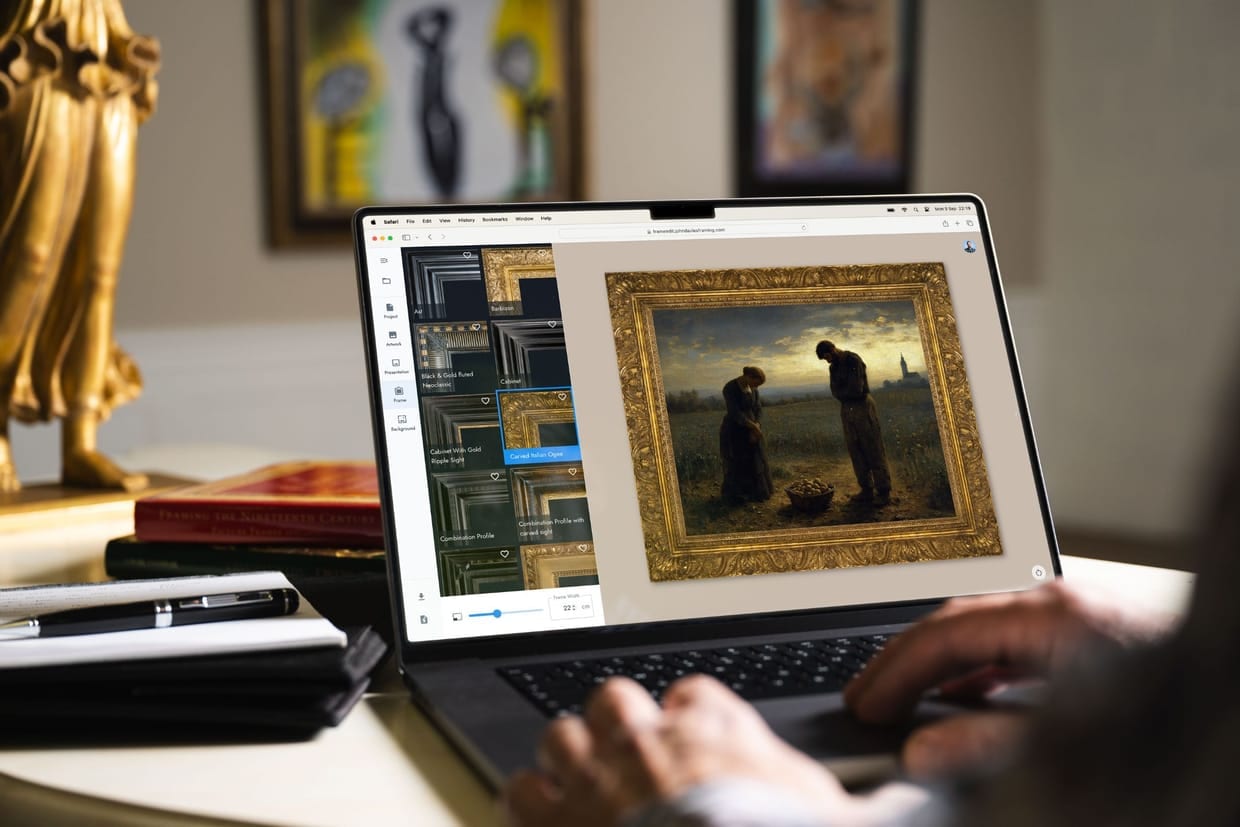
A laptop on a desk in a gallery office running FrameEdit: a scrolling library of frame profiles down one side, and a nineteenth-century painting of two figures in a field shown inside a carved gilt frame. Framed works hang on the wall behind.

1996, and 2023–now

FrameEdit

The first problem I ever worked on, with much better tools.

Framing a painting is a decision you make once. The moulding is cut, the work is mounted, and changing your mind means starting again on an object that is often irreplaceable. For most of the trade’s history the way to make that decision was a corner sample held against the canvas, and a good eye.

I first worked on this at eighteen, with my father, on software that let a client see a painting in a frame before committing to it. The Times covered what we were doing in 1996. Nearly thirty years later I came back to the family business and built FrameEdit on the same idea: high-fidelity rendering, a large frame library, and AI that can identify the artwork it is looking at.

FrameEdit was used in the process of framing René Magritte’s L’empire des lumières, which sold in 2024 for $121.16 million.

EVIDENCE

  1. John Davies Framing: a family business of fifty years, which has framed more than US$150 billion worth of artwork.
  2. 1996: art and technology combined in the framing business (The Times).
  3. Co-owner and Strategic Advisor since October 2023.
  4. FrameEdit launched in 2024: high-fidelity rendering, a large frame library, AI-assisted artwork identification.
  5. Company records include roughly 60,000 orders.
  6. Used in the process of framing René Magritte’s L’empire des lumières (1954), sold in 2024 for $121.16 million.

Collaborators

Integration, platform and launch work across two decades of building creative software. Relationships, not a client list.

Apple chose us to showcase AR filmmaking at the 2021 iPad Pro launch.

START A CONVERSATION

If any of this is close to something you are deciding, the useful conversation is the specific one.

Tell me what you are weighing up and I will tell you what I would do — including when the answer is that you do not need me. Three or four sentences is plenty.